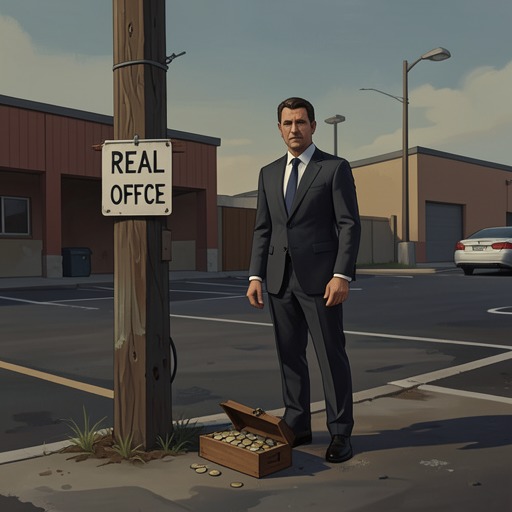
Ray Kroc
Rich Dad Poor DadRay Kroc appears as a model of strategic attention: although he sold hamburger franchises, he identified the real estate beneath them as the foundation of his business. In the book, his example makes the difference between a person’s profession and personal business concrete, and shows how an apparently familiar consumer enterprise can rest on ownership of valuable assets.
Identity and Introduction
In 1974, Kroc, identified as the founder of McDonald’s, spoke to an MBA class at the University of Texas at Austin. Keith Cunningham, a friend of the narrator, was a student there. After Kroc’s talk, students invited him to join them for beers at their usual gathering place. In that informal setting, Kroc turned the conversation toward the question of what business he was actually in.
The students laughed, assuming he was joking. When one finally answered that Kroc was in the hamburger business, Kroc replied that this was what he had expected them to say. He then stated that his business was real estate. The exchange introduces him not simply as a prominent franchise seller but as someone who looked past the visible product to the property and ownership structure underlying it.
Franchise Sales and Real Estate
Kroc’s business plan did include selling hamburger franchises, but, as Cunningham recounted it, Kroc never lost sight of each franchise’s location. He regarded the real estate and its position as the most significant factors in a franchise’s success. In the account’s explanation, a person buying a franchise was also paying for and buying the land beneath it on behalf of Kroc’s organization.
The book extends this point from Kroc’s own way of thinking to McDonald’s scale of ownership. It states that McDonald’s became the world’s largest single owner of real estate, owning more than the Catholic Church, and that its holdings included valuable intersections and street corners in the United States and elsewhere. The contrast between hamburgers and land is the central reversal: the business customers readily recognized was not, in Kroc’s account, the business that mattered most.
Profession, Business, and Assets
Kroc’s example serves the book’s distinction between a profession and a business. His profession remained sales: he had sold milkshake mixers and later hamburger franchises. His business, by contrast, was the accumulation of income-producing real estate. The book argues that people often confuse earning a wage in a field with owning the enterprise or assets connected to that field; a banker who works at a bank, for example, does not thereby own the bank.
The distinction gives Kroc’s anecdote its instructional force. The book contrasts a person’s profession leading to income with assets leading to income, and presents Kroc as someone who knew which side of that distinction his lasting business occupied. His sales work was the means; property ownership was the asset strategy. The lesson is not that selling franchises was irrelevant, but that Kroc kept his attention on what those transactions accumulated for his organization.
Narrative Role and Significance
Kroc’s appearance is brief, but it connects the chapter’s argument about personal assets to a recognizable business example. The book uses his question to make listeners reconsider an easy label, then develops the answer into a broader principle: employment and professional skill can generate income while leaving a person dependent on someone else’s business. Building or acquiring income-producing assets is presented as a different undertaking.
The anecdote also supplies a practical image for the book’s injunction to mind one’s own business. Kroc’s example shifts attention from the product sold at the counter to the locations secured beneath the franchises. In this framing, his significance lies less in a detailed personal biography than in the clarity of his business distinction: the visible trade was hamburgers, while the underlying asset base was real estate.